
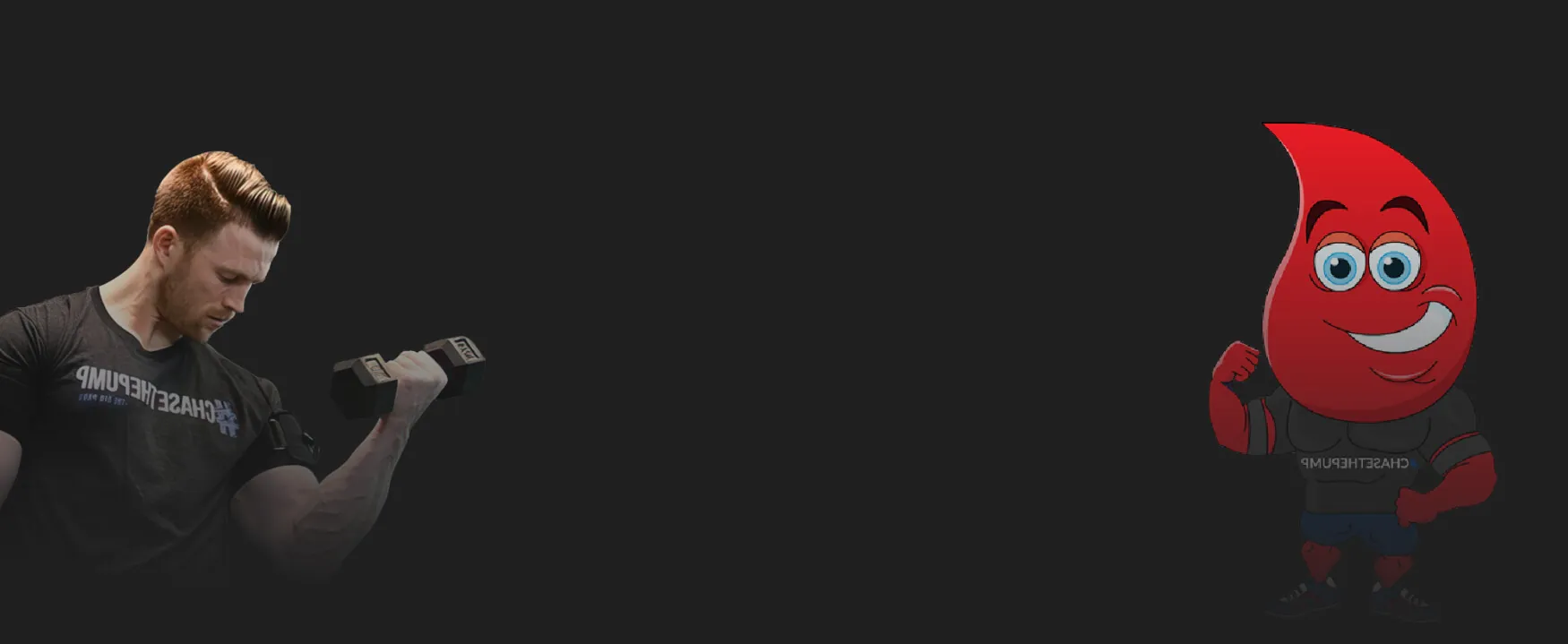
Mechanism
Heavy-load gains at light-load tolerances
Cell swelling, metabolite accumulation, and elevated motor-unit recruitment under restriction produce hypertrophy and strength adaptations across multiple muscle groups in published trials.
Blood flow restriction (BFR) accelerates strength gains for post-op, in-season, and geriatric patients. Mayo Clinic, Cleveland Clinic, and US Special Operations Command all use it.
BFR research featured in

















What BFR does for your practice
Blood flow restriction (BFR) drives strength and hypertrophy adaptations comparable to heavy resistance training using just 20-40% of one-rep max. A calibrated pneumatic cuff restricts venous return on the proximal limb while arterial flow continues, so the muscle works harder at lighter loads and the body adapts as if the load were heavy. Useful when heavy loading is contraindicated (post-op, in-season, geriatric) or simply isn't the priority.
Mechanism
Cell swelling, metabolite accumulation, and elevated motor-unit recruitment under restriction produce hypertrophy and strength adaptations across multiple muscle groups in published trials.
Safety
The largest published BFR safety survey across 12,642 sessions reported deep vein thrombosis at 0.06%, pulmonary embolism at 0.01%, and rhabdomyolysis at 0.01%. Screening protocols and pressure prescription drive that record.
Breadth
BFR has published evidence in post-surgical loading, sarcopenia, tendon adaptation, in-season maintenance, and aerobic conditioning across rehab and performance settings.
Why now
The technique isn't new. The application in modern outpatient rehab and S&C is. The literature has matured, the equipment has standardized, and major institutions are bringing BFR into clinical and performance practice.
The KAATSU patent followed in 1994. Adoption in US clinical settings accelerated through the 2010s as research output expanded.
Adverse event rates comparable to or lower than standard resistance training, when applied with screening and pressure protocols.
Published trials demonstrate hypertrophy and strength adaptations at 20-40% 1RM under restriction that match traditional 70-80% 1RM training.
Mayo Clinic, Cleveland Clinic, Northwestern Medicine, and US Special Operations Command all use BFR. The American Physical Therapy Association recognizes BFR within PT scope. The National Athletic Trainers Association approves BFR for athletic trainers.
Who it's for
The certification is approved or scope-recognized for three core audiences. Pick the lens that fits your practice.
For PTs
Apply BFR to post-op loading, ACL rehab, rotator cuff, the total knee at month four, and the geriatric population whose joints can't tolerate heavy resistance.
BFR is within PT scope of practice per APTA
See the PTs pageFor ATs
Apply BFR to in-season maintenance, sideline-friendly recovery, post-injury return-to-sport, and the athlete who can't load heavy in-season but still needs to maintain strength.
BFR is approved for ATs per NATA
See the ATs pageFor S&C
Apply BFR to in-season hypertrophy at low loads, ischemic preconditioning, and the athlete whose schedule won't allow heavy training but who still needs to progress.
Performance applications across rehab and S&C settings
See the S&C pageFor clinic owners and directors
Most BFR training certifies one therapist at a time. This brings the workshop to your floor and gets your whole team to one protocol, so BFR becomes a service the clinic delivers, not a thing one person knows.
The team
A small team of clinicians, educators, and operators behind The BFR Pros. The teaching is Dr. Rolnick's work; everyone here makes it ship.



BFR within your scope
The two governing bodies for the primary practitioner audiences have stated, in plain language, that BFR is within practice scope.
APTA
BFR is within the PT scope of practice.
For Physical Therapists
NATA
BFR is approved for use by Athletic Trainers within the NATA scope.
For Athletic Trainers
Adopted by clinic networks treating thousands of patients





Latest from the podcast
Long-form conversations with researchers, clinicians, and athletes pushing BFR forward. Three most recent episodes below.
Episode 22
Research evidence
Episode 21
Pressure prescription
Episode 20
Clinical practice
From the blog
Research breakdowns, programming notes, and case-led commentary. Three newest posts below.
Where Nick has shown up
A sample from the personal-press catalog. The full inventory of mainstream features, on-camera interviews, and podcast appearances lives on the press page.
The next step
The Complete BFR Certification teaches the protocols, screening, and pressure science. Taught by Dr. Nicholas Rolnick, equipment-agnostic, online and self-paced.

